In 2026, the most underrated workforce revolution isn't happening in Silicon Valley boardrooms it's happening in small businesses. Retail shops, clinics, agencies, and manufacturing units are quietly deploying AI agents that don't just answer questions but actually do work: replying to customers, booking appointments, chasing invoices, updating records, and handing off only the tricky stuff to humans.
If you still think AI for small business means a chatbot on your website, this guide will show you how far the field has moved and how to get a real return from it in weeks, not months.
What Are AI Agents, Really?
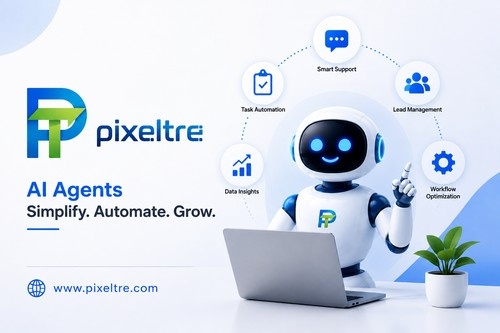
An AI agent is software that can take a goal, break it into steps, use tools (your CRM, email, calendars, databases), and act semi-independently until the job is done.
The key difference from a chatbot:
- Chatbots respond to a prompt and stop.
- AI agents act on it they can make calls to your systems, verify data, draft documents, and follow up until the task is complete.
Think of an agent as a reliable digital employee that works 24/7, never calls in sick, and costs a fraction of a salary.
Why 2026 Is the Tipping Point for SMBs
Three things changed recently that make agents practical for small businesses:
1. Cost collapsed. Agent platforms are now affordable enough that even a 5-person business gets positive ROI quickly.
2. No-code tools matured. You no longer need a data science team. Modern agent builders are drag-and-drop.
3. Integration got easy. Agents now connect to WhatsApp, Gmail, Zoho, Shopify, and accounting software out of the box — the same tools you already use.
The result: the "AI advantage" that was once exclusive to enterprises is now a level playing field.
Where AI Agents Deliver the Biggest Wins
1. Customer Support, Around the Clock
The most common first win. An agent handles FAQs, order status, returns, and basic troubleshooting on your website and WhatsApp simultaneously.
What it looks like in practice:
- Answers 80–90% of routine questions instantly.
- Escalates only complex cases to a human, with full context attached.
- Speaks in your brand voice and in multiple languages, if needed.
2. Lead Qualification and Follow-Up
Leads die from slow follow-up. An AI agent pounces the moment a lead comes in:
- It asks qualifying questions, scores the lead, and updates your CRM.
- It schedules demos and sends reminders.
- It re-engages cold leads automatically turning missed opportunities into booked calls.
3. Appointment Booking and Reminders
For clinics, salons, consultants, and service businesses, agents handle the entire booking lifecycle checking availability, confirming slots, sending reminders, and handling reschedules. No-shows drop sharply when an agent confirms every appointment.
4. Back-Office Automation
Agents quietly handle the repetitive work no one wants:
- Drafting and chasing invoices.
- Categorizing expenses.
- Summarizing meeting notes and generating action items.
- Preparing weekly reports from scattered spreadsheets.
5. Internal Knowledge
Instead of interrupting your senior staff, teammates ask an agent trained on your own documents standard operating procedures, pricing, policies and get accurate answers instantly.
Real Talk: Cost and ROI
Here's a realistic picture for a small business that deploys one or two agents:
- Entry cost: Most businesses start with an agent platform that costs a few hundred dollars a month — or add agent capabilities to tools they already own.
- Time saved: Businesses typically report reclaiming 10–20+ hours per employee per week on repetitive tasks.
- Faster service:Response times drop from "same-day, maybe" to seconds.
Even a modest deployment usually pays for itself in the first month when you count the hours saved and the leads no longer dropped.
A Simple Roadmap to Get Started
You don't need to redesign your business overnight. Start small and scale:
1. Pick one painful process. Choose the task that eats the most staff time — usually support or lead follow-up.
2. Map the workflow. Write down the steps a human currently takes, from first contact to completion.
3. Choose the right platform. Work with a development partner who can connect the agent to your existing tools securely — not a flashy demo that stands alone.
4. Train it on your data. Feed it your FAQs, policies, price lists, and product details.
5. Add human oversight. Start with a "human approves important actions" mode, then relax controls as the agent earns trust.
6. Measure everything. Track first-response time, resolution rate, and hours saved then expand to the next process.
Watch Out for These Pitfalls
AI agents are powerful, but smart deployment matters:
- Don't leave them unsupervised. Every agent should have logs, limits, and a clear escalation path.
- Guard your data. Ensure customer and business data stays secure and isn't used to train public models.
- Keep a human in the loop for money and contracts. An agent can prepare, but a human should approve payments and big commitments.
- Set clear fallbacks. If the agent is unsure, it must hand off to a person gracefully never guess.
The Bottom Line
AI agents in 2026 aren't about replacing your team they're about removing the busywork so your team can focus on customers and growth. The businesses that adopt them now will build an efficiency moat that competitors will find hard to cross.
The smartest small businesses aren't asking whether to use AI agents anymore. They're asking **where to start first**. That's a question worth answering this quarter.
Need help identifying the right process to automate first? A structured AI automation assessment mapping your workflows, choosing the right agent platform, and building a pilot in weeks, not months is the fastest path to results. Talk to an AI development partner who has done it for small businesses before committing to a platform.